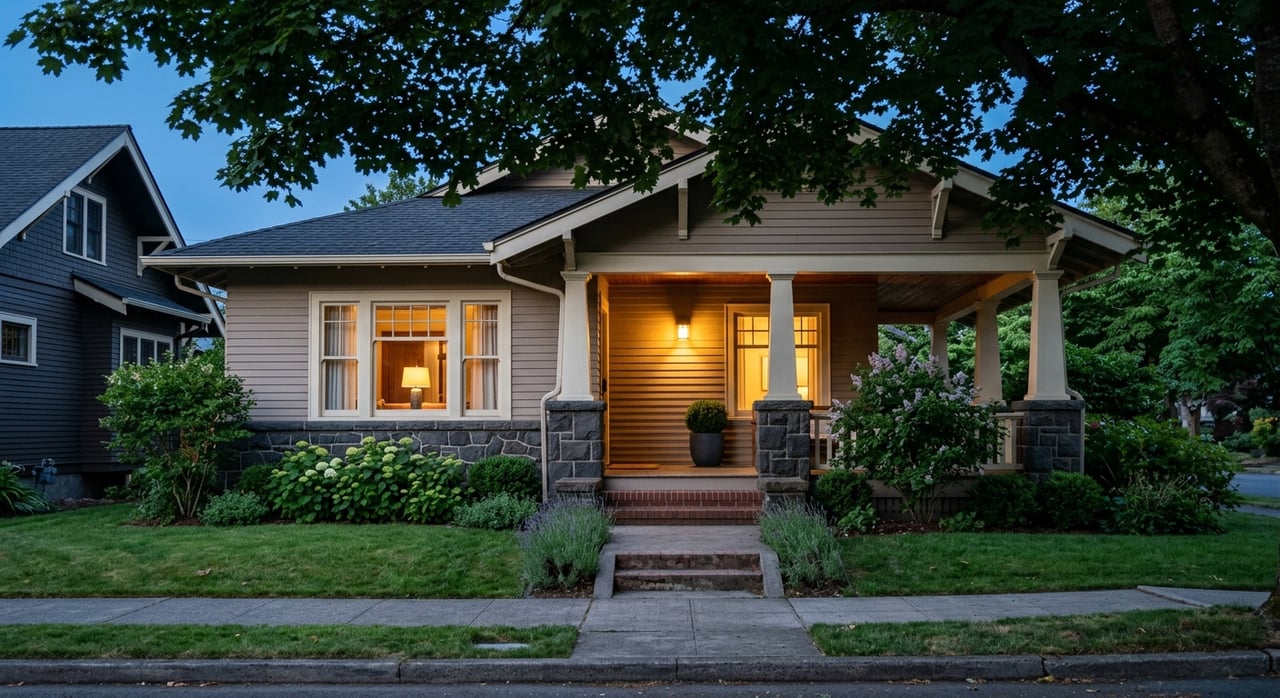
If you are drawn to older homes, tree-lined streets, and easy access to both downtown Boise and the foothills, Boise’s North End probably already has your attention. It is one of those neighborhoods people talk about for good reason, but living there day to day comes with both real appeal and a few practical tradeoffs. If you are wondering whether the North End fits your lifestyle, this guide will help you understand the homes, rhythm, and realities of living there. Let’s dive in.
North End at a Glance
Boise’s North End is one of the city’s oldest residential areas and sits just north of downtown. City materials describe it as Boise’s first suburban development, and the North End Neighborhood Association notes that it is one of the city’s oldest residential and mixed-use neighborhoods.
The neighborhood feels established in a way that newer areas usually do not. Boise’s neighborhood plan reported 10,220 residents, a 34% tree canopy compared with 14% citywide, and that 98.3% of residents live within a 10-minute walk of a park or trailhead. In everyday terms, that often means shade, shorter outings, and a strong connection to the outdoors.
What the Neighborhood Feels Like
The North End has a close-in, lived-in feel. You are near downtown, but the streetscape often feels quieter and more residential, with mature trees, older homes, and a street pattern shaped over many decades.
There is also a strong local identity here. The North End Neighborhood Association is volunteer-run and hosts monthly meetings, events, and fundraisers, which adds to the sense that this is an active, involved part of Boise rather than just a place on the map.
Historic Character Shapes Daily Life
A big part of the North End’s appeal is its historic character. Boise has identified five historic districts within the neighborhood, covering about 73% of North End properties, so the area’s look and feel is not accidental. It has been preserved over time.
That preservation shows up in the streetscape. City historic guidelines describe clapboard homes, Queen Anne, Bungalow, Tudor Revival, Colonial Revival, and Ranch styles, along with rear alleys, mature trees, and modest lots that create the neighborhood’s familiar look.
Homes You Will Find in the North End
Most housing in the North End is still single-family. Boise’s plan found that one-unit homes made up 74% of housing units in 2018, with the remainder including duplexes, triplexes or quadplexes, small multifamily buildings, and accessory dwelling units.
That mix gives the neighborhood a little more housing variety than some people expect. Still, if you picture detached homes with architectural character and established landscaping, that is largely what defines the area.
Price Point and Market Position
The North End generally sits in Boise’s premium price tier. Recent market trackers place the neighborhood in the low-to-mid $700,000s, with Zillow listing North End home values at $725,188 and Redfin reporting a March 2026 median sale price of $735K.
Those numbers are not identical because they track different metrics, but they point in the same direction. If you are shopping in the North End, it helps to go in expecting pricing above Boise’s broader market.
Walkability, Parks, and Trails
One of the biggest lifestyle advantages in the North End is how easy it is to reach parks and trails. The city reports that 98.3% of residents live within a 10-minute walk of a park or trailhead, which is a remarkable number and a major reason the neighborhood appeals to people who want to spend more time outside.
Camel’s Back Park is one of the neighborhood’s best-known gathering spots. Visit Boise describes it as both a community space and a gateway to Hull’s Gulch Reserve and the Boise Foothills, while Ridge to Rivers notes multiple trailheads nearby. That setup makes it easier to work a walk, hike, or quick outdoor break into a normal week.
Hyde Park and Everyday Convenience
Hyde Park is a defining part of North End living. It is not just a commercial pocket. Boise’s Historic Preservation Plan identifies it as Boise’s first suburban shopping district, and it became a local historic district in 1980.
For many residents, Hyde Park adds convenience and activity to daily life. Visit Boise notes that shops and dining are just two blocks from Camel’s Back Park, so errands, a meal out, or a coffee stop can fit naturally into a walk around the neighborhood.
The area also hosts the Hyde Park Street Fair, a free September tradition set against Camel’s Back Park. Events like that help explain why the North End often feels community-oriented and active without losing its residential character.
Close to Downtown and Major Destinations
Another reason people choose the North End is location. Boise’s neighborhood plan places it within a one- to three-mile radius of St. Luke’s and VA medical centers, the Idaho State Capitol, Boise State University, and several major parks.
That close-in setting can make daily routines feel more efficient. In 2018, North End households averaged 1.6 vehicles, and while most commute trips were still single-occupant vehicle trips at 76.4%, biking made up about 9% of commute trips, and transit, walking, and working from home all exceeded citywide shares.
What Buyers Should Know About Historic Rules
Historic charm often comes with more oversight, and that is important to understand before you buy. The city says most exterior modifications within historic districts require review, and that can affect plans for siding, windows, additions, garages, and other visible changes.
The guidelines also favor alley-access garages, open front yards, and preservation of mature trees, while discouraging visible front-yard parking. For some buyers, that structure helps protect the neighborhood’s long-term character. For others, it may feel more restrictive than a newer subdivision.
The Tradeoffs of North End Living
No neighborhood is all upside, and the North End is no exception. Depending on the block, you may run into tighter parking, more street activity near Hyde Park and trailheads, and the ongoing upkeep that often comes with older homes and mature landscaping.
The same features that make the neighborhood attractive can also require more attention. Large trees need care, older homes may call for thoughtful maintenance, and exterior projects may take more planning when historic review is involved.
Who the North End Fits Best
The North End often appeals to buyers who value character, location, and access to outdoor spaces. If you like older architecture, shorter trips to downtown, and a neighborhood with a strong identity, it can be a very compelling place to live.
It may be less appealing if you want very low-maintenance exteriors, a large lot, or the easier renovation path that often comes with newer construction. Much of the decision comes down to whether you see historic character and close-in living as advantages worth the tradeoffs.
School Boundary Details Matter
If school access is part of your decision, it is smart to verify attendance by property address. North Junior High and Boise High are in the immediate area, and the Boise School District boundary maps and attendance locator are the best tools for confirming assignment.
That matters because it is easy to make assumptions in a neighborhood with long-standing ties to several nearby schools. If you are comparing homes, checking the exact address can help you avoid surprises later.
Why Many Buyers Keep Coming Back
The North End offers a combination that is hard to replicate in Boise. You get historic homes, a mature urban canopy, nearby trail access, a neighborhood retail core in Hyde Park, and a close-in location that keeps downtown within easy reach.
For the right buyer, that combination creates a lifestyle that feels both connected and rooted. It is one of Boise’s most recognizable neighborhoods because the setting, architecture, and daily convenience all work together in a distinct way.
If you are weighing whether the North End is the right fit for your next move, having local guidance can make the details much clearer. From block-by-block feel to pricing, property condition, and historic considerations, working with a team that knows Boise well can help you move forward with confidence. If you want help exploring North End homes or comparing it with other Boise neighborhoods, connect with Tina Richards.
FAQs
How walkable is living in Boise’s North End?
- Boise reports that 98.3% of North End residents live within a 10-minute walk of a park or trailhead, and the neighborhood has easy access to Camel’s Back Park, Hyde Park, and foothills trailheads.
What types of homes are common in Boise’s North End?
- Most homes are single-family, but the neighborhood also includes duplexes, triplexes or quadplexes, small multifamily buildings, and accessory dwelling units.
Are North End Boise homes expensive compared with other Boise neighborhoods?
- The North End is generally in Boise’s premium tier, with recent market trackers placing values and sale prices in the low-to-mid $700,000s.
Do Boise North End homes have renovation restrictions?
- Many do, especially within historic districts where most exterior changes require city review before work begins.
What is daily life like in Boise’s North End?
- Daily life often centers on tree-lined residential streets, nearby parks and trails, local activity around Hyde Park, and short trips to downtown Boise.
How do you check school boundaries for a North End Boise home?
- The best approach is to verify the specific property address using Boise School District boundary maps and the attendance locator rather than assuming one school assignment for the whole neighborhood.